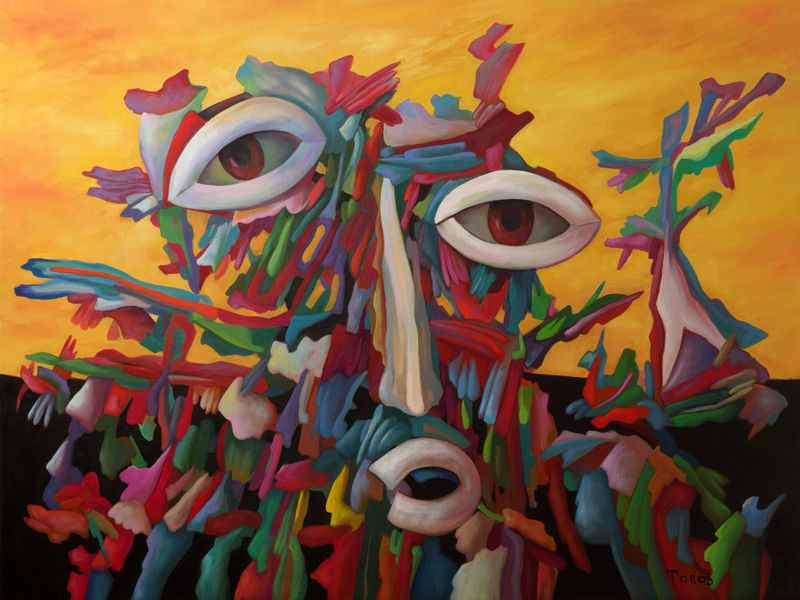
“In Torosyan’s painting, abstraction is not an escape from reality—it is a disciplined architecture for feeling. Figures emerge from rhythmic structure like conscience from pressure, and emotion becomes a built thing: precise, volatile, and unmistakably human.”
Architectures of Feeling — Where Structure Becomes Emotion presents Vagharshak Torosyan’s mature synthesis of architectural discipline and psychological intensity. Each painting operates as a constructed environment: a space where form performs the work of emotion, and abstraction becomes a precise instrument for human presence. Torosyan’s figures are not “depicted” so much as assembled—built from layered segments of paint that behave like shards of memory, units of attention, and residues of experience. Rhythm replaces narrative; contour replaces explanation.
The works in this presentation demonstrate how Torosyan transforms familiar cultural archetypes into contemporary psychological conditions. In Faust, the bargain is rendered as an internal architecture—temptation and consequence held in tension beneath a luminous atmosphere. In Ghost of Don Quixote (2017), heroism becomes endurance: a self rebuilt from fracture into resolve, held against the blackness of doubt. Dance of Mechanical Ant stages the modern psyche as hybrid organism—ritual and mechanism intertwined—where cycles of labor and compulsion become emotional weather. In Phantasmagoria, portraiture becomes spectacle and exposure: abundance, ornament, and performance sharpen into a direct encounter with identity under pressure.
Across these canvases, Torosyan maintains a singular proposition: abstraction is not vagueness, but structure—an exacting means of organizing feeling. His paintings ask for complicity rather than consumption. They reward sustained looking with a slow, cumulative clarity, where ambiguity sharpens into conviction and the viewer recognizes the central subject as something enduringly human: the struggle to hold conscience, desire, hope, and dignity inside the same constructed frame.